
The average monthly per capita consumer expenditure in the country was Rs 554 for the rural areas, while for urban India it was Rs 1,022 according to the National Sample Survey, the Lok Sabha was informed on Wednesday.
The Indian economy may be registering strong growth, but nearly 20 per cent of the population or close to 250 million people of spent less than Rs 14 per person per day on consumption in 2004-05.

The technical report of the NSSO has generated controversy following its observation that as much as 36 per cent units forming part of MCA-21 database, used in computing GDP, could not be either identifiable or traceable in the field.

This survey also shows how things have moved forward since the last large-scale sample survey conducted by NSSO in 2012-13

'Mamata needs to address the anger and resentment among various sections of the Hindu community because low-scale communal violence has always paid richer electoral dividends for the BJP.'

This graphic shows scholarships available to Indians as reported by the 64th round of the National Sample Survey.

A man suspected to have contracted Guillain-Barre syndrome (GBS) has died in Maharashtra's Solapur district, while the number of cases of the immunological nerve disorder in Pune rose to 110, health officials said on Monday.

'It has the potential to sow seeds of furthering discord when the direction of the discourse is aimed at propagating the perceived supremacy of 'cultural nationalism' from a distant past over the prevailing dominance of 'Constitutional nationalism',' argues N Sathiya Moorthy.

It said 33,510 slums were estimated to be in the urban areas of the country of which 41 per cent were notified.

'Unless the economy is sound in the country how can only three movies collected so much business in a single day?'

The Rediff Labs team analysed the 65th round of the National Sample Survey data for domestic travel to find out some interesting patterns in the way Indians travel.

As per the 64th round of the National Sample Survey, nearly 29 per cent of Indians had relocated in the last 365 days.

'Parents, students and coaching institutes will find alternatives to cater to the demand.'

The survey has found that in one district, 50-60 per cent of the sampled population has developed antibodies to COVID-19, they said.

In what could come as a piece of good news, hunger in India - as measured by the Prevalence of Undernourishment (PoU) by the United Nation's Food and Agriculture Organisation (FAO) - has come down from 16.6 per cent of the population in the 2020-2022 to 13.7 per cent in 2021-23, the latest report on the State of Food Security and Nutrition in the World (SOFI 2024) showed. This means that around 39.3 million people have come out of undernourishment between the two periods, NITI Aayog member Ramesh Chand said on Tuesday.

The last sero-prevalence survey was held from August 1-7, which showed that 29.1 per cent of the people surveyed had antibodies against the coronavirus infection.v
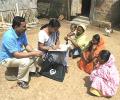
The NSSO had enumerated 79,306 households in rural areas and 45,374 in urban regions.

The exercise will be carried out jointly by the National Centre for Disease Control and the Delhi government and will be held till July 10.

The pan-India survey, conducted with a sample size of over four lakh people by location-based social network platform Public App, also found that over 80 per cent of respondents trust the current voting process in the country.

'One of the big findings is that younger men seem to have shifted towards the Republican Party.' 'In 2020, about 23% of younger men said they would vote Trump.' 'Now that number is 48%.' 'It is like a 25 point shift, and you don't actually see shifts that big in surveys.'

The graphic above shows the level of education in households across India along with reasons for discontinuing or never enrolling in an educational institution.

The survey covered 47,535 households in rural areas and 36,065 households in urban areas.

'The linking of Aadhaar to births and deaths will revive the debate around citizenship.'

The report on 'Household Social Consumption: Education in India as part of 75th round of National Sample Survey -- from July 2017 to June 2018' provides for state-wise detail of literacy rate among the persons aged seven years and above.
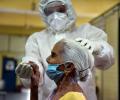
There has been an increase of 6 per cent to 50 per cent in prevalence of antibodies among people in various districts compared to the prevalence found in the previous survey

The substantially increased economic dualism may exert lasting negative influences which could include a reduced potential for economic growth; the persistence of a very weak employment and poverty situation; rising social and political discord; and heightened vulnerability to geopolitical challenges, cautions Shankar Acharya, former chief economic adviser to the Government of India.
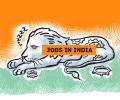
Niti Aayog vice-chairman Rajiv Kumar debunked claims of jobless growth, saying how can a country grow at an average of 7 per cent without employment.

The BJP may win more seats in the February 5 assembly election, but not enough to trump AAP, notes Ramesh Menon.

As many as 30 percent of the players picked T20 as the most important format.

The Indian market remains an attractive place to do business for the nation's entrepreneurs, with 75 per cent of them operating domestically.

Retail inflation rose marginally to 9.84 per cent in September, mainly due to a hike in food prices, particularly of vegetables.

The Ministry of Statistics and Programme Implementation (Mospi) has started preparations for the eighth Economic Census (EC), which is expected to be formally launched next year, sources told Business Standard, even as the results of the seventh edition are yet to be made public. "Centre has asked states and Union Territories (UTs) to submit requirements for funds and manpower in a bid to start work on the eighth EC. "The states and UTs are required to set up a dedicated unit to conduct the exercise.
The Prime Minister's Office has decided to set up a panel, led by former chief statistician T C A Anant, to deliberate on whether the enterprise-level quarterly data, which is released by the labour bureau, should be discontinued.

While overall employment rose from 456 mn to 463 mn between FY11 and FY15, with farm employment falling by 26 mn over the same period, the net addition to employment over the entire four year period was a mere 7 mn.
